
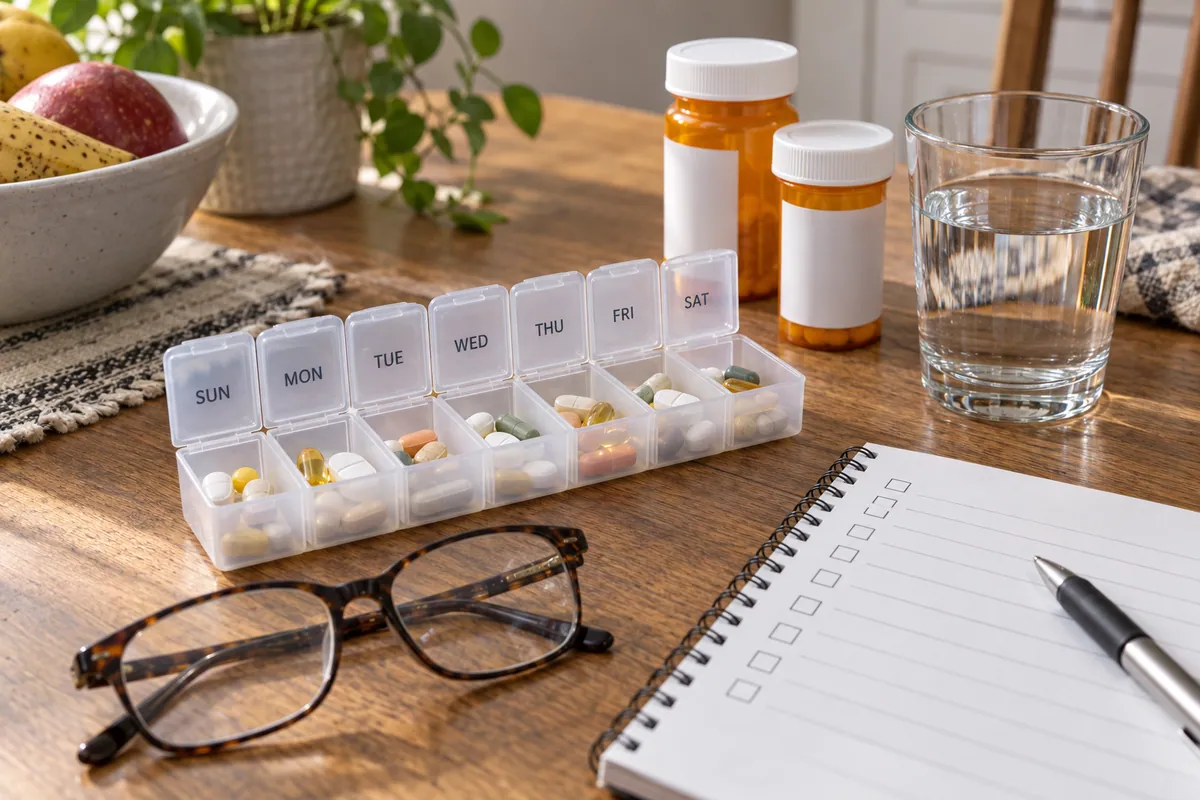
Medication reconciliation is the process of comparing what a person took before an episode of care, what was given during treatment and what should be taken next. It sounds administrative; it is a safety task. Transitions create predictable errors: a discontinued drug remains in a pill organizer, a temporary drug is continued indefinitely, or the RCFE receives a list without signed orders.
A list is not always an order
Ask the receiving RCFE what signed documentation it needs to assist with medication and who will provide it before move-in.
Collect the three versions
Gather the pre-admission medication list, the current administration record or inpatient list, and the discharge list. Include over-the-counter products, vitamins, inhalers, drops, patches and “as needed” medications.
Do not decide on your own which version is right. Mark discrepancies and ask a qualified clinician to resolve them.
Ask what changed and why
For each addition, stop or dose change, ask whether it is permanent, temporary or awaiting follow-up. Note any laboratory monitoring, blood-pressure parameters, food instructions or taper schedule.
If the resident cannot explain the regimen, identify the clinician who can. “Continue home meds” is not enough when the home list itself is outdated.
- Medication name, strength, route and timing
- Reason for use
- Start, stop or review date
- As-needed indication and maximum frequency
- Monitoring or hold instructions
- Prescriber and pharmacy contact
Match the plan to RCFE operations
California RCFEs provide non-medical care and may assist residents with medication within licensing rules and the resident’s plan. Ask how the residence stores medications, documents assistance, handles refills and responds to missed or refused doses.
If the regimen requires a licensed procedure or monitoring beyond the RCFE’s role, arrange the appropriate outside professional and confirm the facility can coordinate safely.
Solve the first-dose problem
Confirm which pharmacy will serve the resident, whether it has the prescriptions and when delivery will occur. Ask whether the residence accepts a short supply from the sending setting and how controlled medications are transferred.
The plan should account for the dose due immediately after arrival, not just the next refill. Weekends, holidays and evening moves deserve extra attention.
Review again after the move
Within the first few days, compare the RCFE medication record with the final discharge instructions and observe for unexpected sleepiness, dizziness, pain, confusion, nausea or other changes. Contact the appropriate clinician for concerns; do not stop prescribed medication based only on a website.
Include medication review in the first 72 hours after an RCFE move.
Sources & important note
Zeal reviewed the primary sources below while preparing this article. Policies, benefits and individual circumstances can change; confirm current requirements with the responsible agency, health plan and licensed provider.
- CMS: Discharge Planning Checklist for patients and caregivers
- California Department of Aging: Assisted Living Facilities
- CDSS: Residential Care Regulations
Editorially reviewed September 2026.